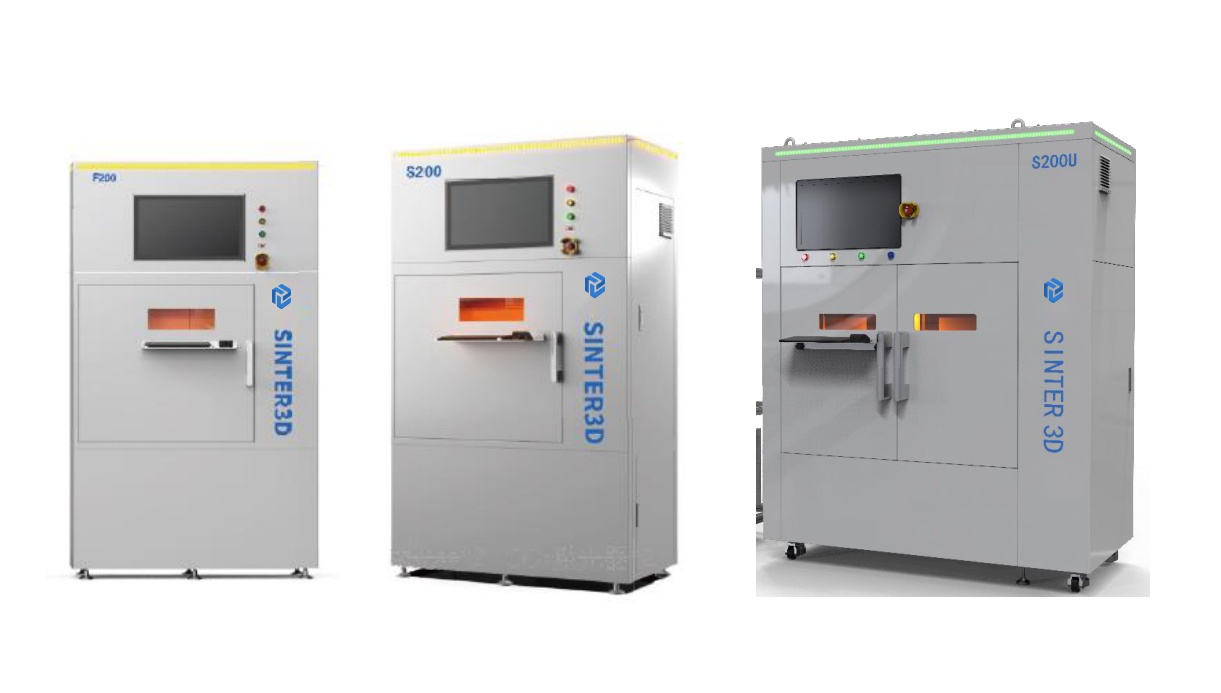
200 Series
200 x 200 x 300 mm; selected models 200 x 200 x 250 mmFor material testing, education, application validation and small functional parts.
Covering 200, 450 and 650 build platforms, Sinter3D supports R&D validation, service bureaus, low-volume production and industrial functional parts through integrated systems, material-process validation and application support.
The series differ not only by size, but by their role in material validation, service capacity, batch production and difficult-process development.
For material testing, education, application validation and small functional parts.
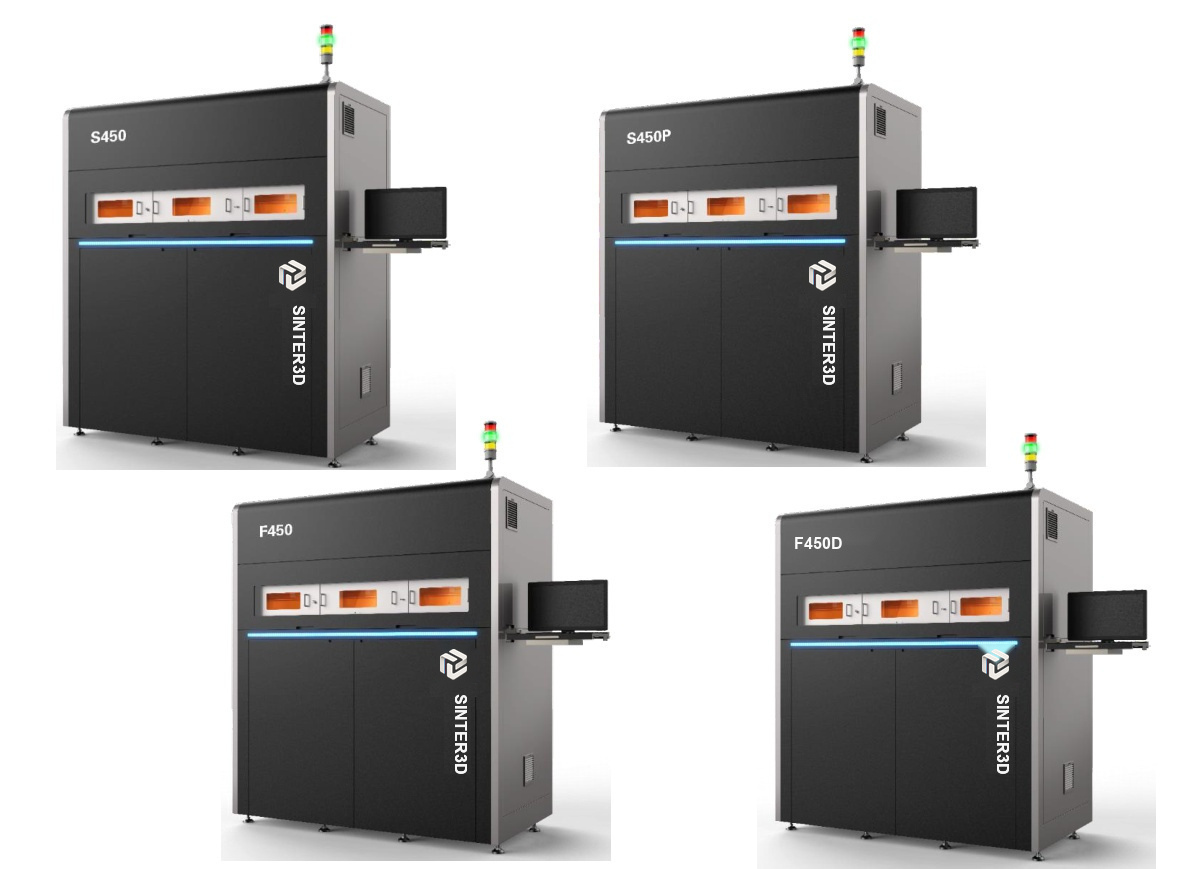
For service bureaus, small-batch production and industrial functional parts.
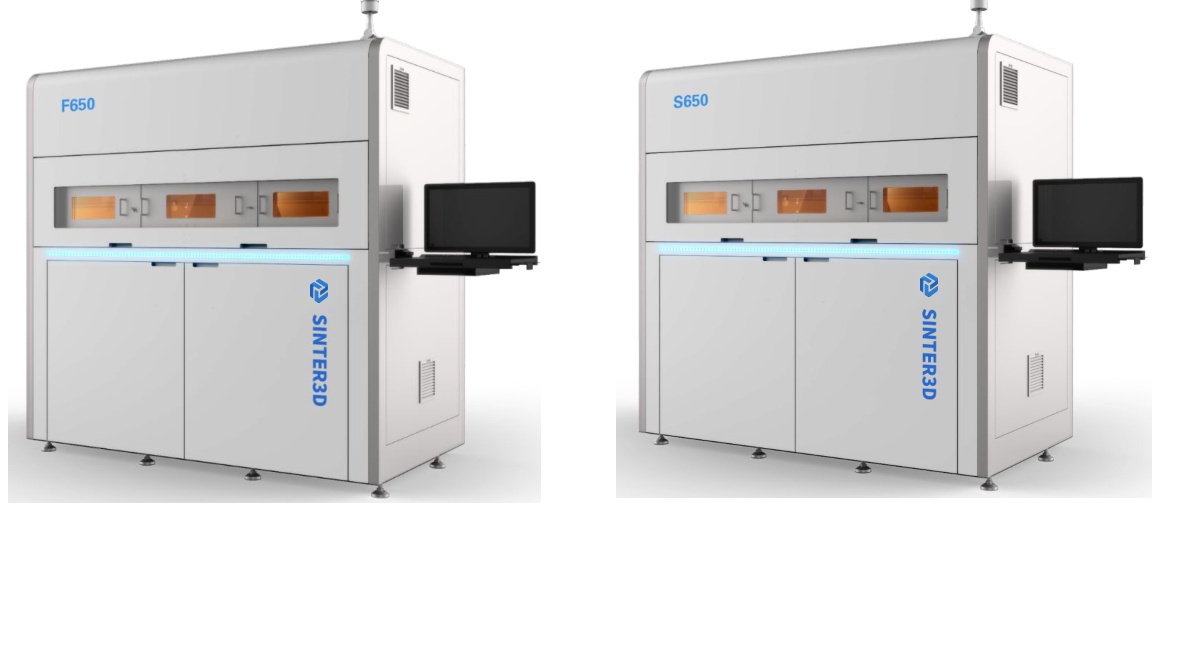
For larger parts, batch production and capacity expansion.
Each series includes different laser routes, temperature levels, scan speeds and material directions. This website view is for product-line understanding; final configuration should be confirmed through project discussion and formal technical documents.
| Platform | Models | Max Working Temperature | Max Scan Speed | Layer Thickness | Standard Materials | High-performance Materials |
|---|---|---|---|---|---|---|
| 200 | F200 / F200+ / S200+ / S200U | 190-350 ℃ | 8-12 m/s | 0.08-0.12 mm | Standard materials: PA12, PA11, PA6, PP, TPU and related composites | High-performance materials: PPS, PEKK, PEEK and related composites |
| 450 | F450 / F450D (dual laser) / S450 / S450P | 230-300 ℃ | 15-20 m/s | 0.08-0.15 mm | Standard materials: PA12, PA11, PA6, PP, TPU and related composites | High-performance materials: PPS, PEKK, PEEK and related composites |
| 650 | F650 / S650 | 230 ℃ | 15-20 m/s | 0.10-0.20 mm | Standard materials: PA12, PA11, PA6, PP, TPU and related composites | High-performance materials: project-based process validation by material and application requirements |
Sinter3D systems support material validation, service capacity, low-volume production and complex functional parts.
Reduce tooling wait and iteration cost so design, structure and material validation can move into physical testing faster.
The 450 / 650 Series are better suited to service jobs, batch forming and high-mix low-volume tasks.
Suitable for complex geometries, one-off customization, lightweight structures, fixtures, functional prototypes and end-use validation.
Powder handling, powder reuse, parameter records and process management help reduce long-term operating cost.
Start with material, part size, batch size, accuracy, temperature level and business model, then confirm the model. Final configuration can be determined by material system, part geometry and process-plan evaluation.
F200, F200+, S200+ and S200U cover material testing, education, small functional parts and high-performance material process development.
F450, dual-laser F450D, S450, and S450P, a 300 °C large-format high-temperature system, target service bureaus, low-volume trials and industrial functional parts.
F650 and S650 target larger parts, batch production and capacity expansion once demand is clearer.
The 200 and 450 Series separately support PPS, PEKK, PEEK and related high-performance composites in addition to standard materials.
System selection starts with material, part and production requirements, then moves to platform and configuration.
PA12, PA11, PA6, PP, TPU, PPS, PEKK, PEEK or related composites influence temperature level, laser configuration, atmosphere control and process-validation approach.
Part size, wall thickness, accuracy, batch size, post-processing and delivery rhythm determine whether 200, 450 or 650 is appropriate.
Exact model, power, build height, material fit and service conditions can be confirmed for each project.
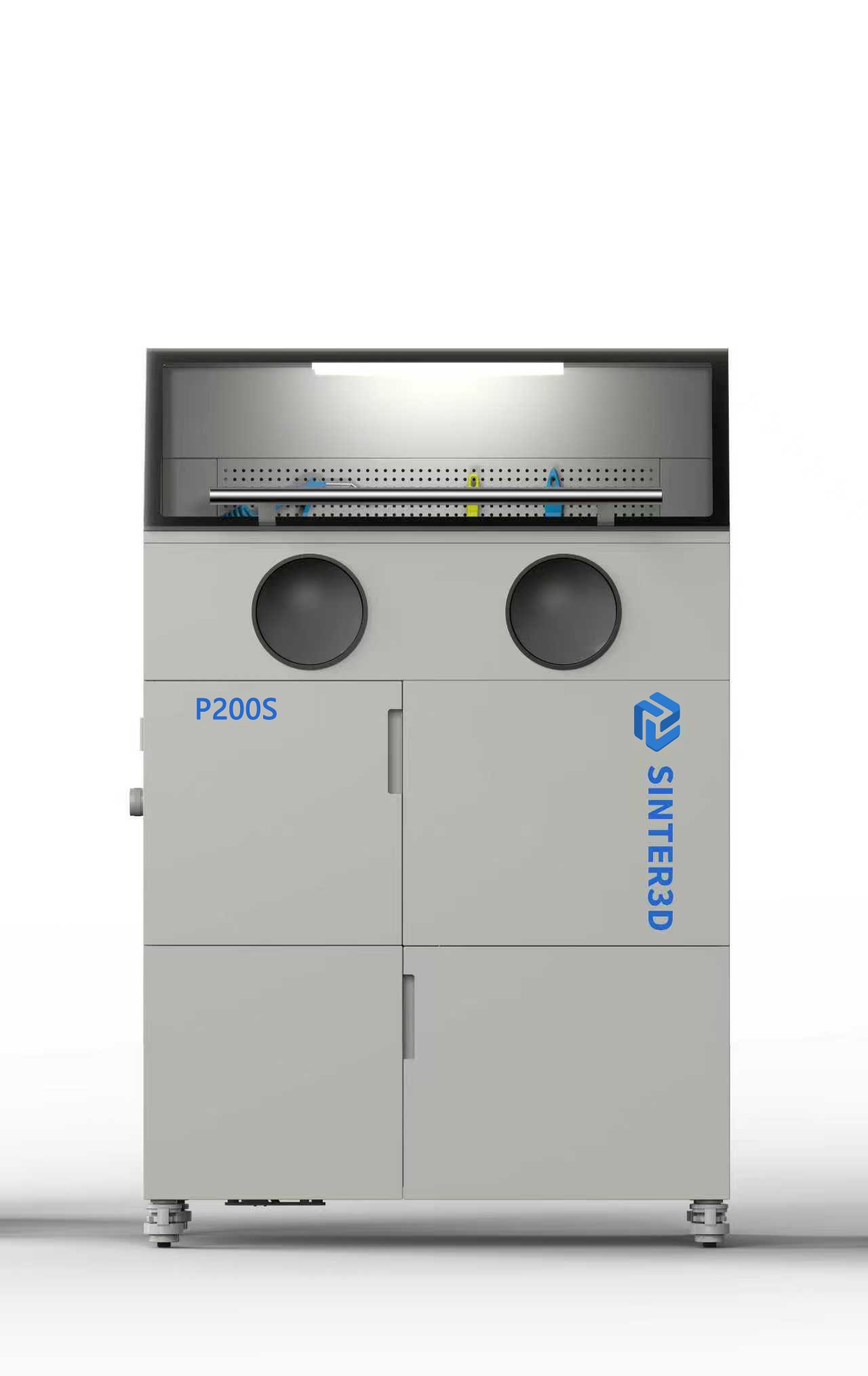
SLS production is not only about the main printer. Powder recovery, depowdering, part transfer and downstream finishing affect shop-floor efficiency, working environment and long-term operating cost. Sinter3D systems can be paired with post-processing equipment according to the customer's application scenario.
Supports powder collection, transfer and workspace management after printing jobs.
Supports part removal, surface powder cleaning and standardized preparation before downstream finishing.
Each system can be paired with post-processing equipment according to application needs, forming a more complete SLS production cell.
System competitiveness comes not only from machine size, but from software, hardware, thermal field, scan strategy, beam control and parameterized process packages.
Motion control, galvanometers, PLCs, oxygen monitoring and thermal-field modules support powder spreading, scanning, heat management and protective atmosphere control.
System software and production-management interfaces support machine operation, job management, parameter records and process tracking.
Airflow, thermal-field control, multi-galvo operation, multi-beam collision avoidance, beam shaping and parameterized process packages improve stable application across materials and complex geometries.
A quick view of the current lineup. Detailed configuration can be confirmed during project discussion based on material, part and capacity requirements.
| Series | Build Volume | Main Use | Material Range |
|---|---|---|---|
| 200 Series | 200 x 200 x 300 mm; selected models 200 x 200 x 250 mm | For material testing, education, application validation and small functional parts. | PA12, PA11, PA6, PP, TPU and related composites; ultra-high-temperature models support PEEK, PEKK, PPS and related materials. |
| 450 Series | 450 x 450 x 400/600 mm | For service bureaus, small-batch production and industrial functional parts. | PA12, PA11, PA6, PP, TPU and related composites; ultra-high-temperature direction supports PEKK, PPS and related materials. |
| 650 Series | 650 x 450 x 850 mm | For larger parts, batch production and capacity expansion. | PA12, PA11, PA6, PP, TPU and related composites. |